First Ukulele Chords: C, Am, F and G7
Start with C and Am, then add F and G7. You do not need a large chord collection to practise your first changes. First, tune your ukulele.
Read the fret positions
The numbers below run G–C–E–A, string 4 to string 1. Zero means an open string; a number means the fret to hold. These shapes are for GCEA tuning, not standard baritone DGBE.
| Chord | G–C–E–A frets | Suggested fingering |
|---|---|---|
| C | 0–0–0–3 | Ring finger on A, fret 3 |
| Am | 2–0–0–0 | Middle finger on G, fret 2 |
| F | 2–0–1–0 | Keep middle on G2; index on E1 |
| G7 | 0–2–1–2 | Index E1, middle C2, ring A2 |
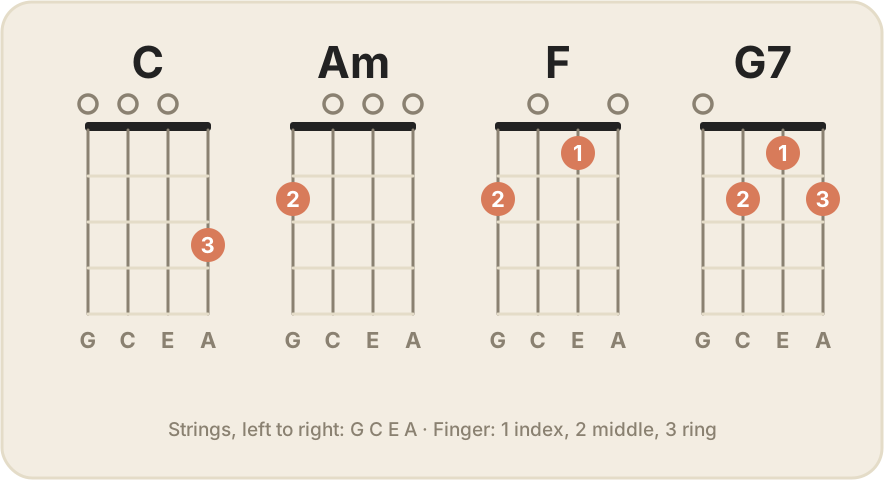
Finger choices are suggestions. If another comfortable fingering makes each note clear and helps the next change, use it.
Check one chord before speeding up
Place a finger just behind the fret wire, rather than on top of it. Pluck each string separately. A dull note often means a finger is touching a neighbouring string or not holding the intended string cleanly. Adjust angle and position before squeezing harder.
For F, check that your index finger does not mute the open A string. For G7, play all four strings slowly and listen for each note. Keep the wrist comfortable and take a break if the position feels strained.
Try this original four-bar loop
Play one bar each of C | Am | F | G7. Count four steady beats per bar and strum only on beat 1. Use the remaining beats to prepare the next shape. Repeat four times. If the beat stops, practise only the difficult pair before returning to the full loop.
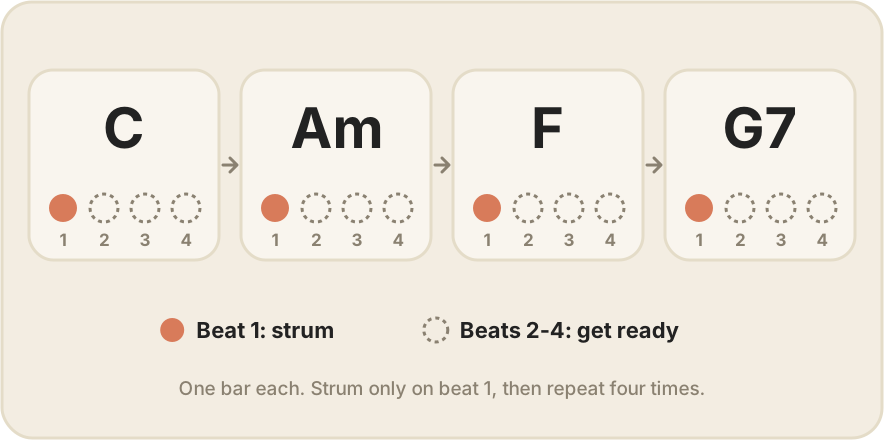
A clean, relaxed change at a slow tempo is more useful than racing through silent or muted chords.
Next: make chord changes smoother, then try simple strumming patterns.
For guided practice on your phone, get Uku. Advanced practice follows the app’s trial and one-time unlock terms.